On November 21, 1869, Sergei Nechaev, a prominent anarchist, murdered a young Russian student who had been a member of his movement. Fyodor Dostoevsky wrote a novel, Devils, based on this event. By turns hilarious and haunting, Devils provides a glimpse into the revolutionary mind. The story gives a blistering account of the transition from liberal idealism to revolutionary nihilism in nineteenth-century Russia. And it examines the role that ideas play in politics, culture, and society. Like Nietzsche, Dostoevsky explored the ways in which the death of God might affect morals and politics. He asked: what are human beings capable of? If we tear down existing institutions, what do we put in their place? Dostoevsky foresaw how revolutionary movements might evolve into totalitarian rule: Shigalov, the revolutionary theorist in the novel, makes the chilling claim, “Starting with unlimited freedom, I conclude with unlimited despotism.” In this class, students will engage in a close reading of Dostoevsky’s masterful novel. Alongside Dostoevsky, we will investigate the morality and psychology of revolution.
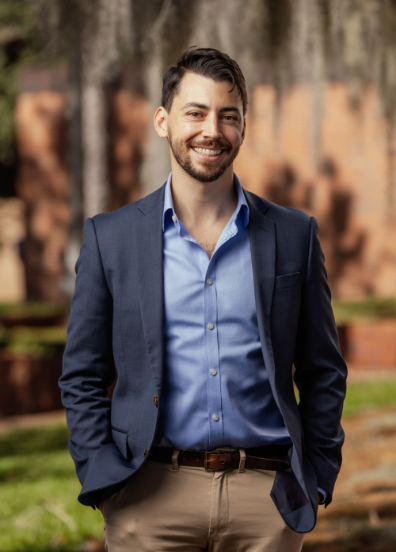
Aaron Alexander Zubia is Assistant Professor in the Hamilton School for Classical and Civic Education at the University of Florida. Previously, he was Postdoctoral Fellow with The Tocqueville Program in the Department of Politics and International Affairs at Furman University. In 2019-20, he was a Thomas W. Smith Postdoctoral Research Associate in the James Madison Program in American Ideals and Institutions in the Department of Politics at Princeton University. Aaron specializes in the moral and political philosophy of the Scottish Enlightenment and the American founding. His current research focuses on the thought of eighteenth-century Scottish philosopher David Hume. His book, The Political Thought of David Hume: The Origins of Liberalism and the Modern Political Imagination, will be published in Spring 2024 by the University of Notre Dame Press. His scholarly work has appeared in Hume Studies and Interpretation: A Journal of Political Philosophy. He has also written in The Wall Street Journal, National Review, First
Things, Law & Liberty, Washington Examiner, and Public Discourse. He is the winner of the first annual Hume Studies Essay Prize for his paper, “Hume’s Transformation of Academic Skepticism,” and he was a runner up for the Jack Miller Center’s Excellence in Civic Education Award in 2021. He holds an M.A. and Ph.D. in Political Science from Columbia University, an M.Div. from Princeton Theological Seminary, and a B.B.A. in Marketing from the University of Texas at El Paso.