Machiavelli may well be the most widely known name in the history of philosophy, thanks to the enduring association of his name with the kind of moral and political outlook or philosophy he explicated in 1532 in his most (in)famous work, The Prince. The influence of this book made “Machiavellian” a household word, even 500 years later, for someone who is manipulative, deceptive, and ruthlessly pragmatic in the pursuit of power. And not just a household name: in psychology “Machiavellianism,” narcissism, and psychopathy comprise the so-called “dark triad” of personality traits.
In this course, we will read The Prince, the primary source of Machiavelli’s enduring cultural and intellectual influence. This short book, often considered “the most famous book on politics ever written”—though also “the most infamous”—is why Machiavelli is credited as the “founder of modern political science,” and it is why you reading this probably know his name already.
Together, we will read and discuss Machiavelli’s presentation of his distinctively modern moral and political philosophy in The Prince. This is a philosophy in which the classical notion of “virtue” is reconceptualized to have virtually the opposite of its traditional meaning, in which the notions of “necessity” and “fortune” and the understanding of how one ought to respond to circumstances are rendered radically amoral, even ruthlessly pragmatic—and in which Machiavelli recommends one morality for “the great” (princes, rulers, “the elite”) and another for “the people” (the masses).
In weekly 50-minute class discussions, we will explore and critically analyze Machiavelli’s ideas and arguments, as well as explore relevant connections across the history of philosophy. For example, we’ll consider the perennial figure of the “moral skeptic,” from Thrasymachus in Plato’s Republic to David Hume’s “sensible knave,” and from the Marquis de Sade to the “Masters of Suspicion” (Nietzsche, Marx, and Freud). We’ll also explore connections beyond philosophy, like considering the clinical figure of the psychopath in psychology and psychiatry as an empirical instantiation of the moral skeptic, examining contemporary domestic and international politics in light of Machiavelli’s philosophy, and more.
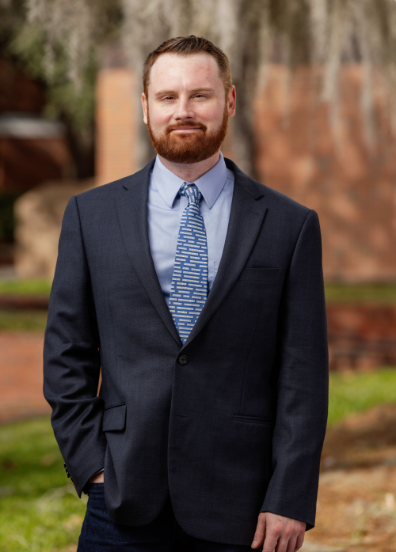
Allen Porter is a Postdoctoral Fellow in the Hamilton School for Classical and Civic Education at the University of Florida. Before joining the Hamilton School, he was a John and Daria Barry Postdoctoral Research Fellow with the James Madison Program in the Department of Politics at Princeton University. He holds a B.A. in German from Princeton University, a M.A. in Philosophy from Tulane University, and a M.A. and Ph.D. in Philosophy from Rice University. His primary research interests are bioethics, continental philosophy, and political philosophy.