IDH 2935

What is America For?

Quest 1
Spring 2024
Class # 30016
MAT 0006 (T), MAT 0005 (R)
Tuesday, Thursday
T 3:00 PM–4:55 PM, R 4:05 PM–4:55 PM

Course Syllabus

University of Florida's Hamilton Center Library

Additional Course Info

The modern philosopher David Hume argued that “man, born in a family, is compelled to maintain society, from necessity, from natural inclination, and from habit.” We are all born into a particular political society. Good citizenship demands that we pursue the good of that political society. To do that, we must understand what that society is meant to achieve. In this class, we will explore this essential question: what is America for? This is a discussion-driven course. Together, we will reflect on how we, as rational and political animals, share and pass on a particular way of life. We will ask how we can rightly claim that there is one American way of life and one way to live it out when we live in a pluralistic society. We will ask whether American identity and purpose have changed—or remained the same—over time. We will take a multidisciplinary approach to these questions, incorporating elements of philosophy, religion, history, political science, and literature. We will consider the roles of religion and culture, urbanism and ruralism, tradition and progress, and gender and the color line, as we grapple with this essential question of national purpose.
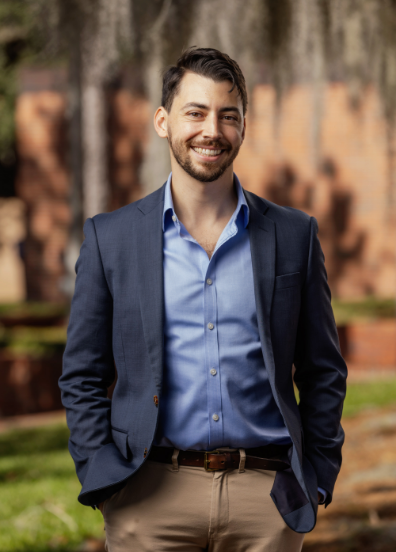

Instructor

Aaron Zubia

Aaron Alexander Zubia

Assistant Professor of Humanities
CSE 0576

Aaron Alexander Zubia’s research uncovers how our ideas about God, nature, and human nature shape our political thought and discourse. In his first book, The Political Thought of David Hume: The Origins of Liberalism and the Political Imagination, Zubia focuses on Hume, the Scottish Enlightenment thinker who is arguably the greatest philosopher to have written in English. Zubia’s narrative traces the development of the Epicurean tradition, which Hume appropriated, and which supplies the philosophic framework for liberal politics. Zubia’s teaching, like his research, examines the moral and philosophic foundations of the good society and explores the beliefs that underlie conservative and revolutionary postures. Zubia teaches regularly on the American political tradition and has led an independent study on metaphysics and politics in the Aristotelian-Thomistic tradition.

Support the Hamilton School

Support